Painted Kitchen Colours Popular in East Lothian
Why Colour Choice Matters More Than You Think
A painted kitchen finish transforms the character of a room without requiring new cabinet carcasses or a full refit. The colour you choose affects how natural light reads in the space, how large or intimate the kitchen feels, and how well it holds its appeal over five or ten years. East Lothian kitchens often sit within stone-built or render-finished homes where coastal light, grey skies, and earthy surroundings all influence what reads well indoors.
A cabinet respray costs between £800 and £2,000 for a full kitchen, which makes colour selection a decision worth taking seriously before work begins. Getting the shade wrong and respraying again is avoidable with proper swatching and a short consultation. Kitchens East Lothian offers a free, no-obligation quote that includes colour discussion before any commitment is made.
The Colours East Lothian Homeowners Choose Most
Soft Greys and Blue-Greys
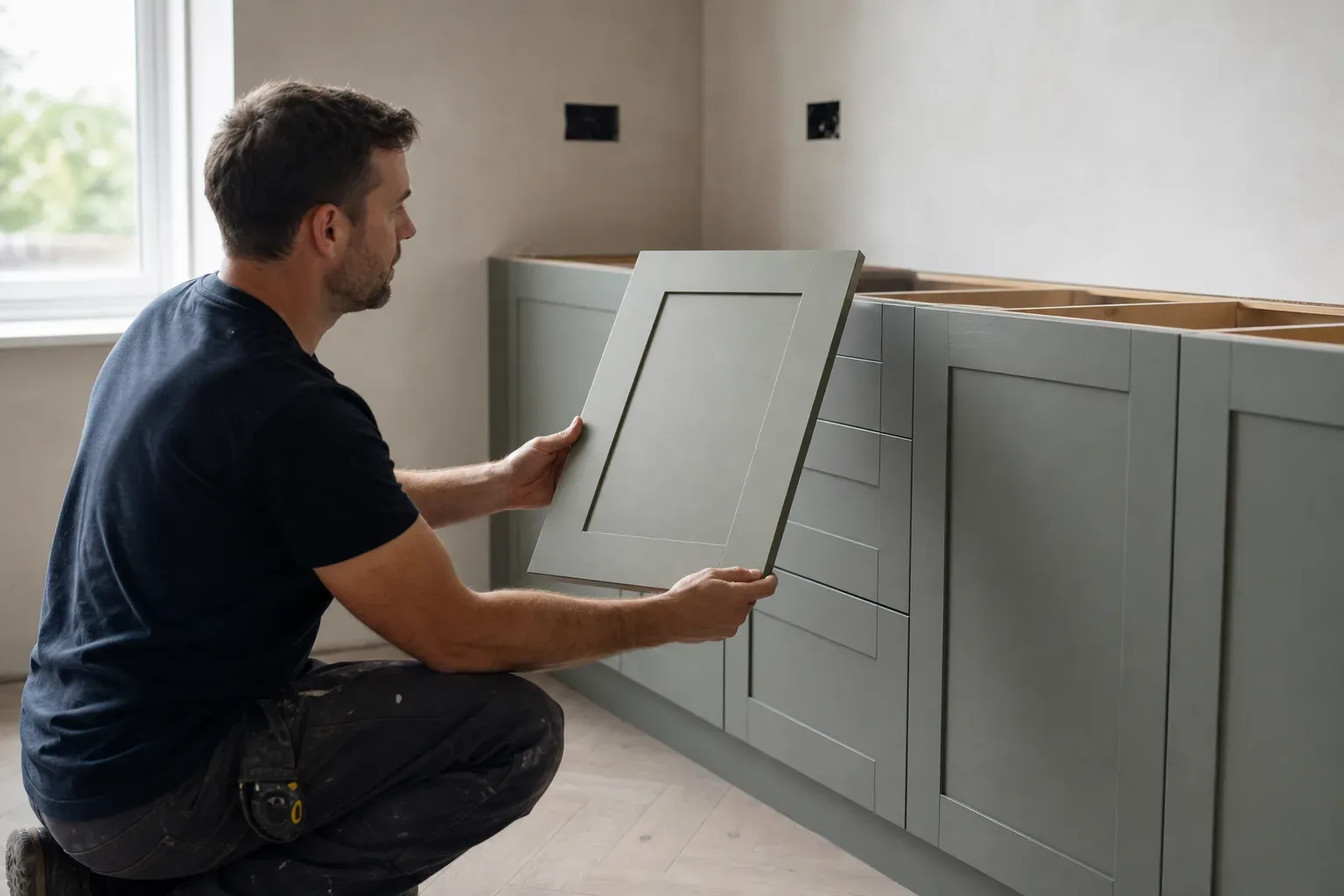
Muted greys remain the most requested cabinet colour across the region. Shades that carry a blue or green undertone sit particularly well in homes near the coast, such as those in North Berwick or Dunbar, where the light shifts between bright sea-reflected whites and heavy overcast tones throughout the day. Farrow and Ball's Mizzle and De La Robbia Blue-Grey are frequently cited starting points, though many homeowners arrive at similar hues through other paint ranges.
The practical advantage of blue-grey is its neutrality under artificial lighting. Warm bulbs push it slightly green; cool daylight reads it closer to slate. Either result tends to be appealing rather than jarring.
Deep Navy and Inky Blues
Navy has moved from accent colour to whole-kitchen statement over the past several years. Darker blues suit kitchens with good natural light or where cabinetry is confined to lower units with pale uppers or open shelving above. In towns like Haddington, where period properties often have generous ceiling heights and sash windows, a deep navy on floor-to-ceiling cabinetry can look grounded rather than oppressive.
Paired with brushed brass or unlacquered copper hardware, navy absorbs light in a way that makes the kitchen feel deliberately designed rather than simply decorated.
Warm Whites and Off-Whites
Pure brilliant white has largely been replaced by creamier, warmer alternatives. Shades with a hint of yellow, pink, or grey undertone age more gracefully in kitchens, where steam, cooking residue, and changing light can make stark white feel cold or yellowed over time. Estate Emulsion-style whites in an eggshell finish are a common choice for families who want a bright space without clinical edges.
For a minor refresh, swapping dated beige or cream cabinetry to a sharper warm white can be completed in one to three days and has a significant visual impact without a full installation.
Sage and Olive Greens
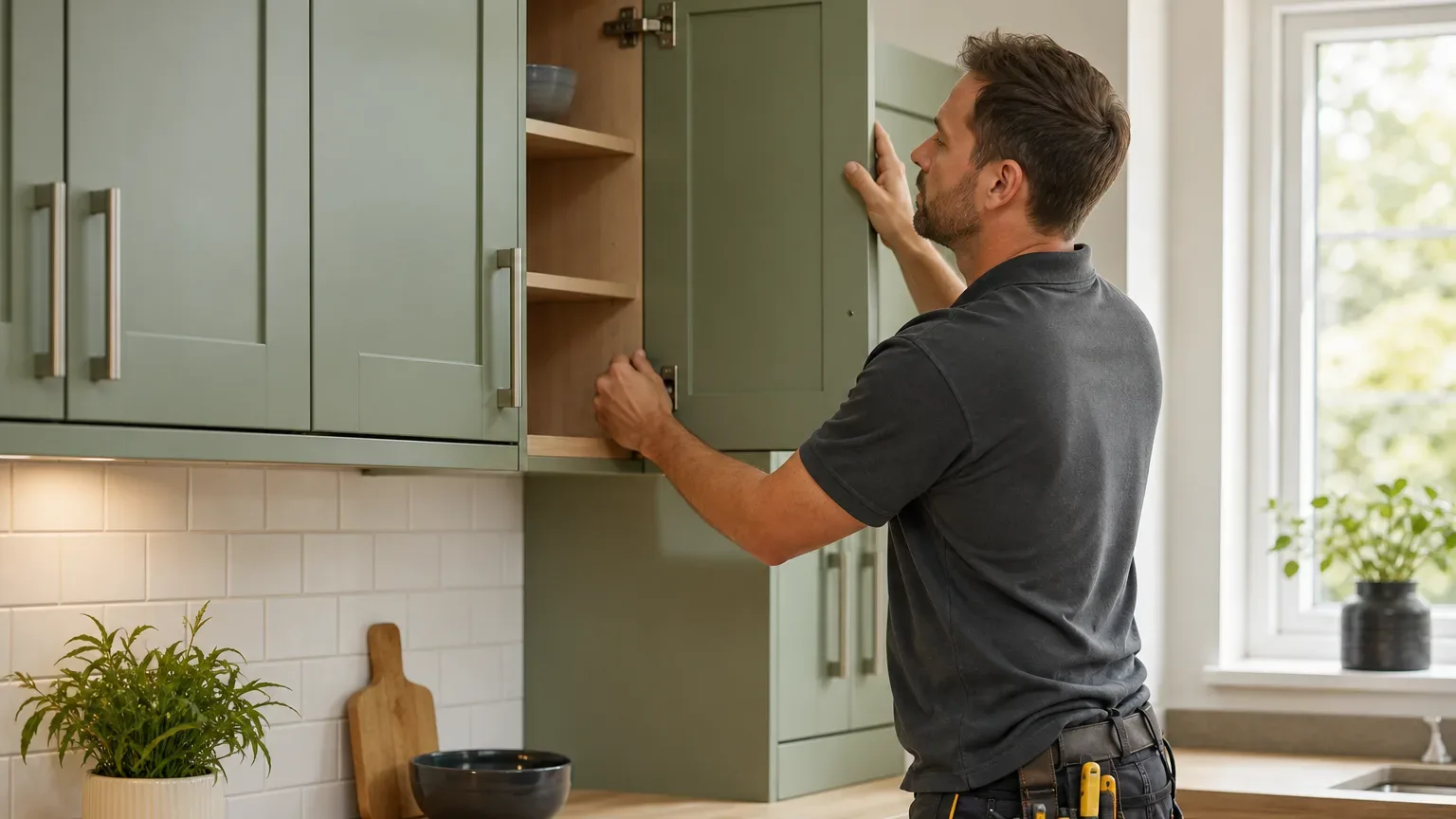
Green has been the standout growth colour in Scottish kitchens over the past few years. Sage, in particular, bridges the gap between cool and warm tones, making it forgiving across different lighting conditions. Olive and muted eucalyptus tones follow closely, often chosen by homeowners who want something earthier than grey but less bold than navy.
Green cabinetry pairs well with oak or walnut worktops, and the combination is particularly sought after in rural and semi-rural East Lothian properties where bringing organic tones indoors feels consistent with the landscape.
Charcoal and Almost-Black
Deep charcoal and near-black finishes suit contemporary kitchens in open-plan settings where a defined kitchen zone benefits from strong colour contrast. These shades require confidence in the design, and they reward it. A charcoal kitchen with light quartz worktops and white or pale grey walls creates a high-contrast finish that photographs well and holds visual interest over years of daily use.
Worktop replacement alongside a cabinet respray is a common combination, with supply and fit priced at £100–£300 per linear metre depending on material choice.
Finishes Matter as Much as Colour
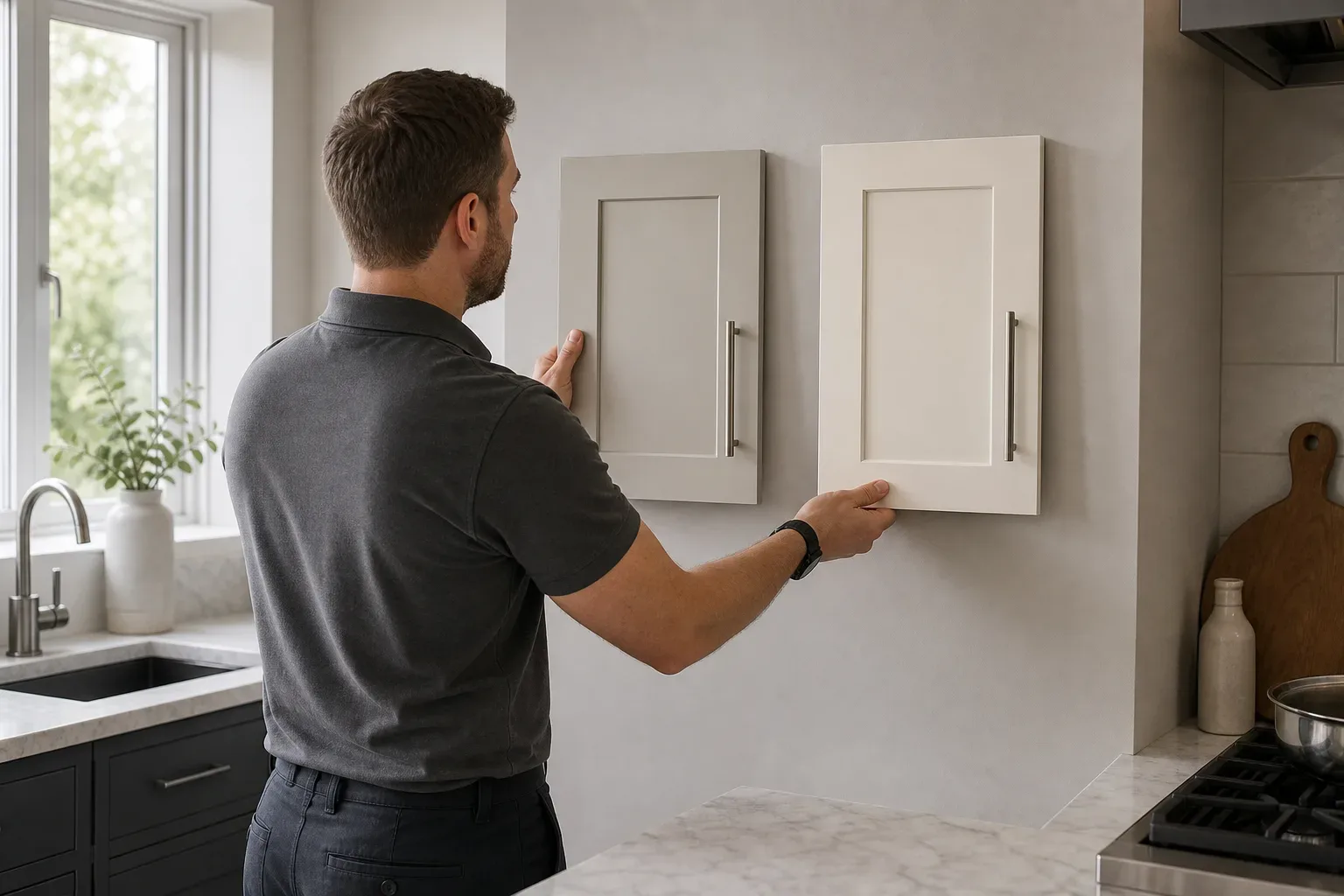
The sheen level of a painted kitchen surface directly affects how colour reads, how durable the finish is, and how easy it is to keep clean. Satin and eggshell are the two most practical choices for cabinet doors. Satin offers a gentle sheen that wipes down easily; eggshell sits slightly flatter and suits period or shaker-style kitchens where a soft, traditional look is the goal.
Matt finishes look beautiful at point of sale but are harder to maintain in a working kitchen, particularly around handles and edges. High gloss is durable but amplifies every small imperfection in the underlying surface, so it requires a flawless base preparation. Kitchens East Lothian prepares cabinet surfaces thoroughly before any respray, which is what separates a finish that lasts from one that chips or peels within a year.
Two-Tone Kitchens - A Growing Request
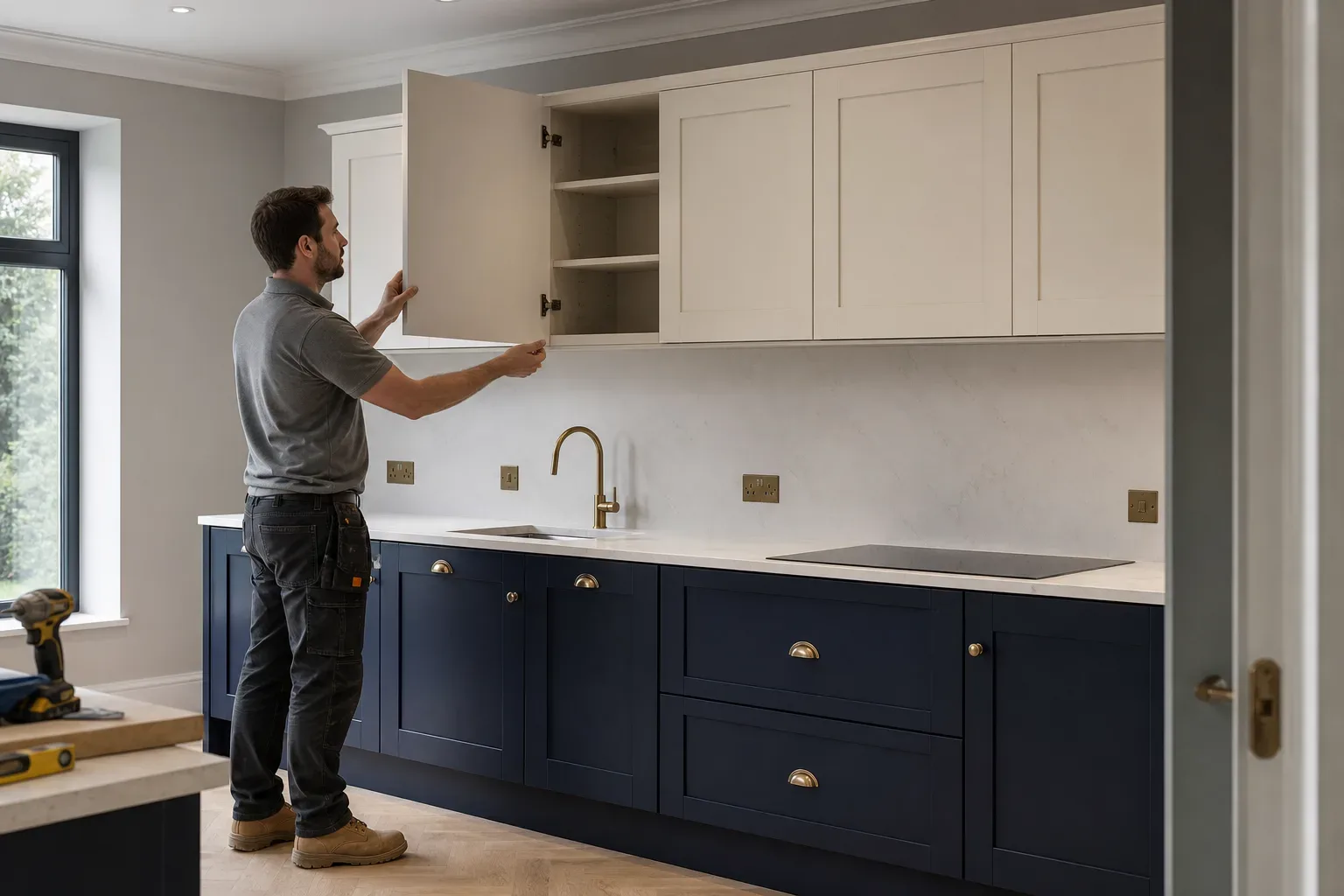
Two-tone cabinetry, using one colour on lower units and a contrasting or complementary shade on upper units, has grown steadily in popularity across East Lothian. The approach works particularly well in kitchens where uppers feel heavy or visually dominating. Painting lowers in a deep tone and uppers in a lighter shade creates visual balance without requiring structural changes.
A common pairing is navy or charcoal lowers with warm white or pale grey uppers. Sage lowers with cream uppers is another combination that works well in cottage-style homes. Both options sit within the £800–£2,000 respray range depending on kitchen size and door count.
Choosing Between Neutral and Statement Colours
Neutral colours, greys, whites, and soft greens, retain broad market appeal and are often recommended when a kitchen sale may be on the horizon within a few years. Statement colours such as deep navy, terracotta, or bold sage tend to reflect the current owner's personality more strongly and may polarise buyers.
That said, a well-executed statement colour in a kitchen with quality worktops and good hardware typically adds more perceived value than a poorly finished neutral. The quality of the application matters as much as the shade itself. A free consultation helps establish which direction suits both the home and its likely future, and Kitchens East Lothian covers all six major towns across East Lothian, from Musselburgh and Prestonpans in the west to Dunbar in the east.
How to Test Before You Commit
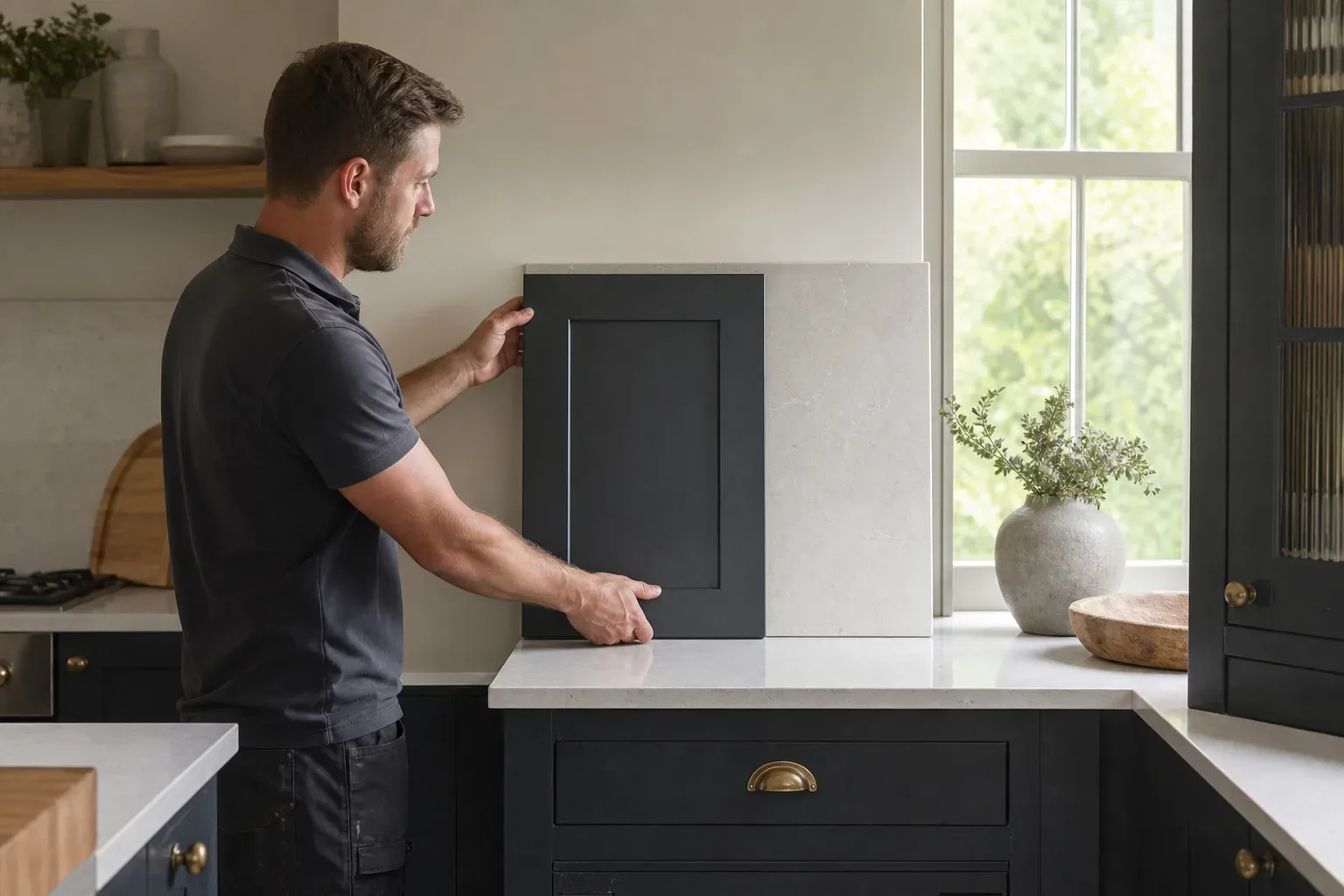
Order large sample cards or tester pots and apply them to a section of actual cabinetry, not just a white piece of card. Observe the swatch at different times of day, specifically morning, midday, and under evening artificial light. A colour that reads beautifully under a showroom's halogen lighting may shift substantially under the cooler LED strips common in modern kitchens.
If the property is on the market or being prepared for sale, lean toward colours with demonstrated broad appeal. If you are staying in the home for the medium to long term, choose the colour that you will genuinely enjoy living with rather than the one that feels safest on paper.
Frequently Asked Questions
What Are the Best Painted Kitchen Colours in 2024?
The most popular painted kitchen colours from recent years have been muted blue-greys, sage and olive greens, warm off-whites, and deep navy. Charcoal and near-black shades have grown in open-plan settings. These tones have remained consistent into 2026 because they age well under changing light conditions and pair naturally with wood and stone worktop materials.
How Much Does a Cabinet Respray Cost in East Lothian?
A full kitchen cabinet respray in East Lothian typically costs between £800 and £2,000, covering on-site preparation, priming, and spraying of existing cabinet doors and frames. The price varies with kitchen size and door count. This range includes your choice of colour, and Kitchens East Lothian provides a free, no-obligation quote before any work is agreed.
What Paint Finish Is Best for Kitchen Cabinet Doors?
Satin and eggshell are the most practical finishes for kitchen cabinet doors. Satin offers a slight sheen that cleans easily; eggshell sits flatter and suits shaker or traditional kitchen styles. Matt finishes look attractive but are harder to maintain around handles and edges, while high gloss requires a near-perfect surface beneath it to avoid showing imperfections.
Does Kitchen Cabinet Colour Affect Resale Value?
A well-applied statement colour can increase perceived kitchen quality and add value, but neutral shades such as grey, warm white, or soft sage tend to appeal to a broader range of buyers. If a sale is likely within a few years, a versatile neutral is the safer investment. The quality of the respray finish matters as much as the colour choice.
Can I Get a Two-tone Kitchen Respray in East Lothian?
Yes, two-tone cabinet resprays are available through Kitchens East Lothian. A common approach is to paint lower units in a deeper shade such as navy or charcoal and upper units in a lighter contrasting colour such as warm white or pale grey. Two-tone work falls within the standard £800–£2,000 respray range depending on the number of doors and overall kitchen size.